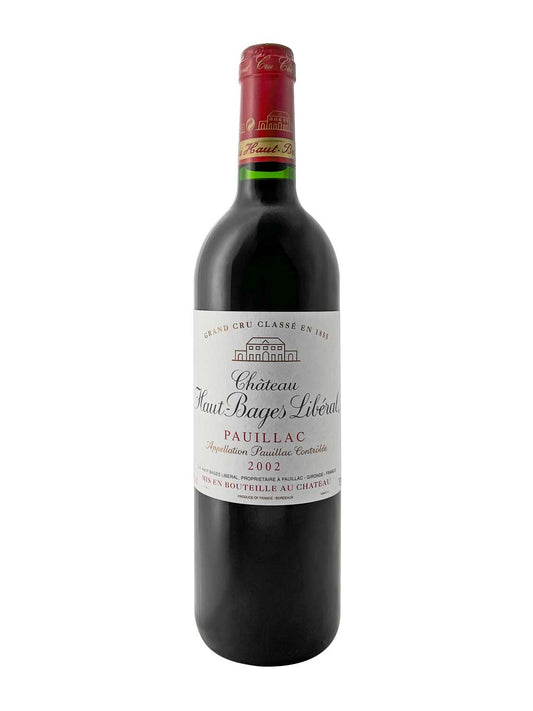
Fill level of a wine bottle from Bordeaux
How much air is in an old wine bottle? For collectors, this question is more important than it initially sounds. I will explain why the fill level matters – and what the English technical terms mean.
Why the fill level is important
The amount of air in the bottle affects the wine. The more air in the bottle, the higher the risk of oxidation. Oxidation, in turn, affects the quality.
But don't panic. For strong vintages or great wines, a lower fill level can even have a positive effect on the taste. However, this does not apply to half-full bottles.
Feel free to check for yourself: look in your wine cellar or wine fridge. Check the fill level of particularly old bottles. Most wines 30 to 40 years old no longer have an Into-Neck fill level. The cork is a natural product. It deteriorates over the years, no matter how perfectly you store it.
If a young bottle (10 years old) already has a Mid Shoulder fill level, this wine is no longer suitable for collecting. Better to drink it with friends. If, on the other hand, you have a Château Mouton-Rothschild from 1945 with Mid Shoulder in your collection, then I envy you. For such old wine, this is completely normal.
Fill level designations depending on the wine region

Bordeaux wine: English terms
For Bordeaux wine – and for Bordeaux-shaped bottles – it is customary to describe the fill level using English terms. These terms describe the exact condition of a bottle.
Burgundy wine: Measurement in centimeters
For Burgundy wine, a different practice has been established. Here, the distance between the cork and the fill level is indicated in centimeters. English terms are not used.
Exceptions: This also sometimes happens with wine bottles from Château Haut-Brion, old bottles from Château Talbot or Château Gruaud-Larose.
Champagne, Riesling & Co.
Champagne and Riesling bottles also have their own shapes. Not every bottle shape can accommodate the same terms. Therefore, different descriptions have been established.
The English fill level terms for Bordeaux wine
For quick orientation, from high to low fill level:
| Term | Position | Typical Age | Oxidation Risk |
|---|---|---|---|
| High Fill / Into Neck / Base Neck | Bottle neck | young to very old | very low |
| Top Shoulder | Start of shoulder | from approx. 20 years | low |
| Upper / High Mid Shoulder | Upper mid-shoulder | from approx. 30 years | low |
| Mid Shoulder | Mid-shoulder | from approx. 40 years | manageable |
| Lower Mid Shoulder | Lower mid-shoulder | from approx. 40+ years | manageable to increased |
| Low Shoulder | End of shoulder | very old rarities | high |
In detail:
High Fill, Into Neck & Base Neck
Here, the wine has no visible loss of liquid. The wine level still has the same width as the bottle neck. You can also buy a bottle with Base Neck without hesitation. Some wineries even bottle to Base Neck as standard. However, you will hardly find a Château Lafite-Rothschild from 1899 with such a fill level.
Top Shoulder
The wine is no longer in the bottle neck, but just below it. At the start of the shoulder, the surface widens slightly. This is quite common for 20-year-old wine.
Upper Mid Shoulder & High Mid Shoulder
These two terms describe an almost identical fill level. It does not matter which of the two you use. Both are exactly between Top Shoulder and Mid Shoulder. For a 30-year-old wine, this fill level is normal. The risk of oxidation is low.
Mid Shoulder
We are now exactly in the middle of the shoulder. Here, the shoulder slowly begins to run vertically again. A 40-year-old wine typically has this fill level. The ullage is due to the aging cork. There is a risk of oxidation, but it remains manageable.
Lower Mid Shoulder
The area between Mid Shoulder and Low Shoulder is called Lower Mid Shoulder. This subtle difference is particularly relevant for perfectionist collectors.
Low Shoulder
The fill level has already reached the end of the shoulder. This is not unusual for particularly old wine. Strictly speaking, this wine should have been recorked long ago. However, this would reduce its collector's value – which is why experienced collectors avoid recorking.
You can also read the article I wrote about this in the blog: Recorking a wine bottle - Risk or Opportunity?
The risk of oxidation is high at this fill level. For a strong vintage, this can even benefit the character of the wine. However, I advise against younger wine with a Low-Shoulder fill level. It is not worth buying a 20-year-old wine and hoping for an increase in value if its condition is already questionable.
Does the fill level affect the value of a wine?
Yes, the fill level is an important criterion for value. For young wine, a low fill level significantly reduces the collector's value. For very old rarities, however, a certain amount of ullage is expected and accepted. The decisive factor is always the relationship between age and fill level – not the fill level alone.
Further questions?
Answers regarding the origin, authenticity, and storage of your wines can be found in our FAQ. Looking for particularly old bottles? Check out our collection of Old Wines.
Bordeaux wine from vintages 2000 - 2009
-
Château Belgrave 2007
Regular price €43,26 EURRegular priceUnit price €57,68 per l -
Château Calon-Ségur 2005
Regular price €172,92 EURRegular priceUnit price €230,56 per l -
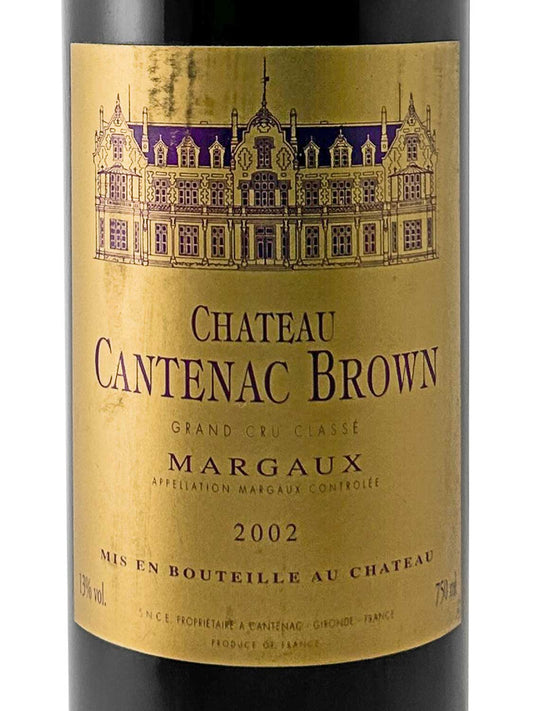
Château Cantenac-Brown 2002
Regular price €60,17 EURRegular priceUnit price €80,23 per l -
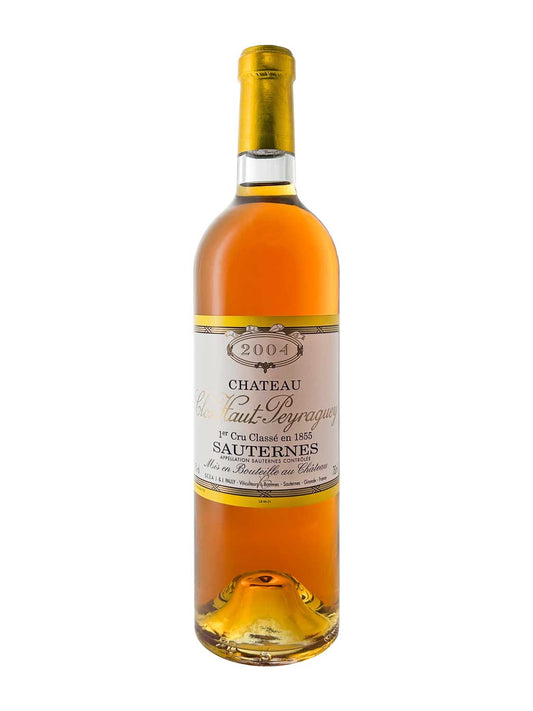
Château Clos Haut-Peyraguey 2004
Regular price €57,77 EURRegular priceUnit price €77,03 per l -
Château d'Yquem 2000
Regular price €470,76 EURRegular priceUnit price €627,68 per l -
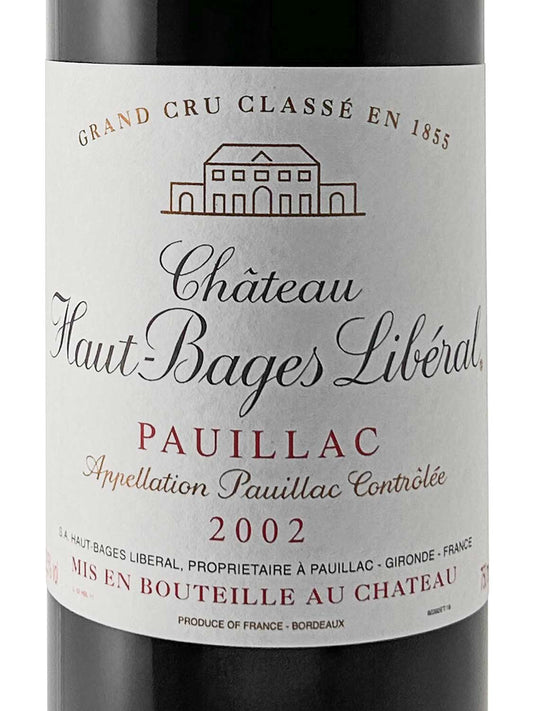
Chateau Haut Bages Liberal 2002
Regular price €53,82 EURRegular priceUnit price €71,76 per l