
Château Pavie 1919
Château Pavie 1919
Saint-Émilion Grand Cru • Red wine • 750 ml - Bottle
1st Growth Class A (Saint-Émilion)
SKU:XE131919NAA
Prices include VAT, margin scheme according to § 25a UStG, plus shipping
1 in stock
Couldn't load pickup availability
- Available within 3 - 5 days
- 100% controlled storage
- Safe packaging
condition of the wine bottle
Snapshot of :
Fill Level: High Mid Shoulder
Label: very dirty, slightly damaged, yellowed, moldy
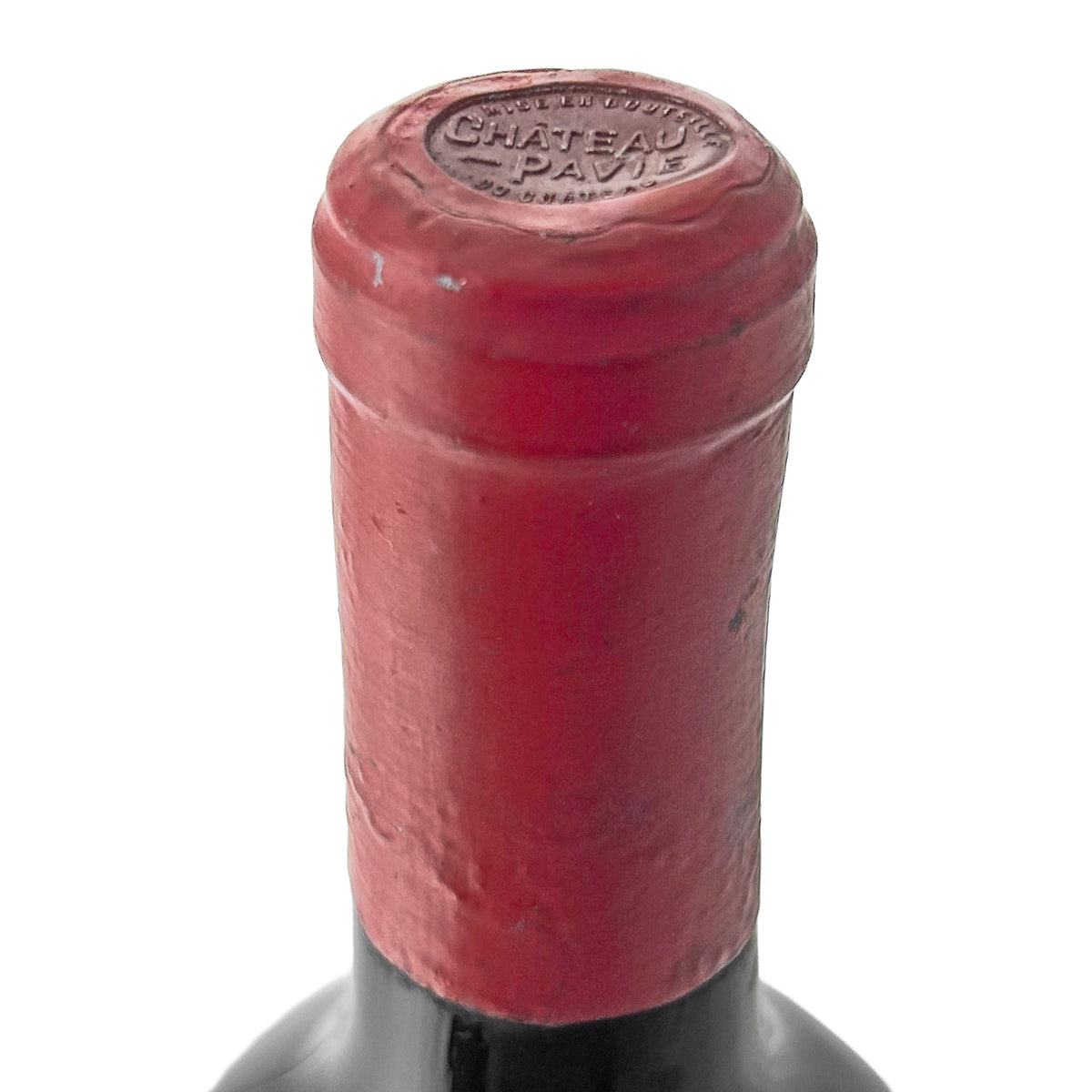
Capsule: lightly soiled, minimal dents
Cork: minimally sunken, otherwise intact
About Château Pavie 1919
The Château Pavie 1919 is a Saint-Émilion Grand Cru and is one of the oldest bottles in our assortment. The label bears the historic designation "1er Grand Cru Saint-Émilion". There was no official classification in 1919; it was only introduced in Saint-Émilion in 1955. Today, Château Pavie belongs to the highest level, Premier Grand Cru Classé A. The 1919 vintage is considered a lighter, early-drinking Bordeaux vintage of the post-war era. Only a few bottles of this vintage have survived the past one hundred years. Those who wish to purchase this Château Pavie acquire a rare Bordeaux collector's wine with over a hundred years of history.
Origin & Classification
Château Pavie is located on the highest plateau of Saint-Émilion, with limestone and clay soils on the plateau and sandy-gravelly sites on the slopes. Ferdinand Bouffard built the modern winery in the late 19th century by acquiring several parcels. In the years after the First World War – around the time of this vintage – ownership passed to Albert Porte, before the Valette family took over the Château in 1943. The grape varietal blend was already predominantly Merlot and Cabernet Franc, as is customary in Saint-Émilion. An official Saint-Émilion classification did not yet exist in 1919, it was only introduced in 1955; the label of this bottle therefore bears the period-typical designation "1er Grand Cru Saint-Émilion" used by the Château itself. In 1954, Château Pavie was officially classified as Premier Grand Cru Classé B, and since the reclassification in 2012, it belongs to the highest category Premier Grand Cru Classé A – one of only four positions at this level. This classification describes the current rank of the winery, not a formal classification at the time of bottling.
The 1919 Vintage
The 1919 vintage in Bordeaux followed a wet July and a hot August. The harvest began on September 20 with a good yield. Contemporary assessments describe the wines of this year as rather light and lacking structure; it was overshadowed by the subsequent vintages of 1920 and 1921. At the same time, 1919 was a solid vintage in an early-drinking style, which is why only a few bottles remain today. The region was still recovering from the consequences of the First World War at this time, including material shortages and currency devaluation. Anyone wishing to purchase such a historic Château Pavie acquires one of the oldest bottles in our assortment. This historical background in particular makes the Château Pavie 1919 an exceptional Bordeaux collector's wine – a bottle that has survived two world wars and more than a century.
FAQ
Is Château Pavie 1919 still drinkable?
With an age of over 100 years and the rather light and early-drinking vintage character typical of 1919, this bottle is not expected to be classically ready for drinking. We recommend treating this bottle primarily as a collector's item and rarity, and not as a wine guaranteed to be enjoyable. Tasting is at your own risk.
What makes Château Pavie 1919 a special collector's item?
The combination of an exceptionally high age of over 100 years, the small number of surviving bottles of this early-drinking vintage, and its origin from one of the highest-classified Saint-Émilion Grand Cru makes this bottle one of the rarest items for collectors and investors.
Does the label bear an official classification?
The label shows the historical designation "1er Grand Cru Saint-Émilion" used by the Château itself. There was no official classification in 1919; it was only introduced in Saint-Émilion in 1955. Since 2012, Château Pavie belongs to the highest official level Premier Grand Cru Classé A.
Is Château Pavie 1919 suitable as an investment?
Exceptionally old bottles like this are also acquired by collectors with a view to rarity and market demand. We do not provide investment advice or guarantee returns – age, origin, and condition serve to assess rarity, not as a financial forecast.

1919 Château Pavie
-
Feature
Classification: 1st Growth Class A (Saint-Émilion)
Filling quantity: 750 ml - Bottle
Alcohol content: 13% Vol.
Allergens: contains sulfites
-
Origin
Wine type: Red wine
Country of origin: France
Growing region: Bordeaux
Appellation: Saint-Émilion Grand Cru
Responsibility
Manufacturer/bottler and responsible food business operator at the same time:
Château Pavie, 2 Pimpinelle, 33330 Saint-Émilion, France
Description of Château Pavie 1919
This Red wine from Château Pavie comes from the appellation Saint-Émilion Grand Cru , a growing region in Bordeaux . It is known that there is a classification system for wineries or wines in France You can complete your collection with this wine 1919 Château Pavie because it belongs to the classification Premier Grand Cru Classé A (Saint-Émilion) . The 750 ml - Bottle has an alcohol content of 13% Vol. .
1919 Château Pavie
Condition
The photos on this page and the description below will give you more information about the condition of this bottle of Red wine from Château Pavie 1919
Fill Level: High Mid Shoulder
Label: very dirty, slightly damaged, yellowed, moldy
Capsule: lightly soiled, minimal dents
Cork: minimally sunken, otherwise intact
If multiple wine bottles are available, the condition of the wine bottle is similar to all bottles available on this product page.
Explanation of the condition
Using a snapshot from we have recorded the condition of this wine bottle 1919 Château Pavie for you.
We would like to point out that despite correct, constant and protected storage, the condition of the wine bottle can change over time. As with humans, the aging process can never be completely stopped. If your bottle Red wine Château Pavie 1919 is on its way to you, shocks or weather conditions can affect its condition. But don't worry, we will pack your wine order carefully and safely.
What you should consider when delivering wine
-
Consider where to leave it
The plan is for you to receive your bottle of wine - Château Pavie 1919 - in person. This ensures that the Red wine is not unnecessarily exposed to the weather. If you have wine delivered to a parcel station, pay attention to cold or hot day and night temperatures. This is because a parcel station is usually not air-conditioned. Spending too long in such a parcel compartment can affect the wine bottle. If the wine delivery was left on your doorstep, a longer stay in hot, cold or wet conditions can also disadvantage the wine bottle.
-
Avoid condensation
Especially in the winter months (below 10 ° Celsius), your wine delivery is exposed to cold temperatures during transport. We therefore recommend that you place your package unopened in a room with a room temperature of approx. 15 - 18 ° Celsius for approx. 24 hours after delivery. This way, the wine bottle acclimatizes gently. If you were to place the cold wine bottle in a warm room, condensation would occur on the glass body. This happens because the warm, humid room temperature hits the cold surface of your new Red wine bottle. The result would be that water droplets and moisture would affect the wine label. A wavy, partially slightly detached label could occur.