


Château Lagrange 1980
Château Lagrange 1980
Saint-Julien • Red wine • 750 ml - Bottle
Third Growth (Médoc)
SKU:XM291980NAA
Prices include VAT, margin scheme according to § 25a UStG, plus shipping
1 in stock
Couldn't load pickup availability
- Available within 3 - 5 days
- 100% controlled storage
- Safe packaging
condition of the wine bottle
condition of the wine bottle
Snapshot of :
Fill Level: Base Neck
Label: soiled, minimally yellowed
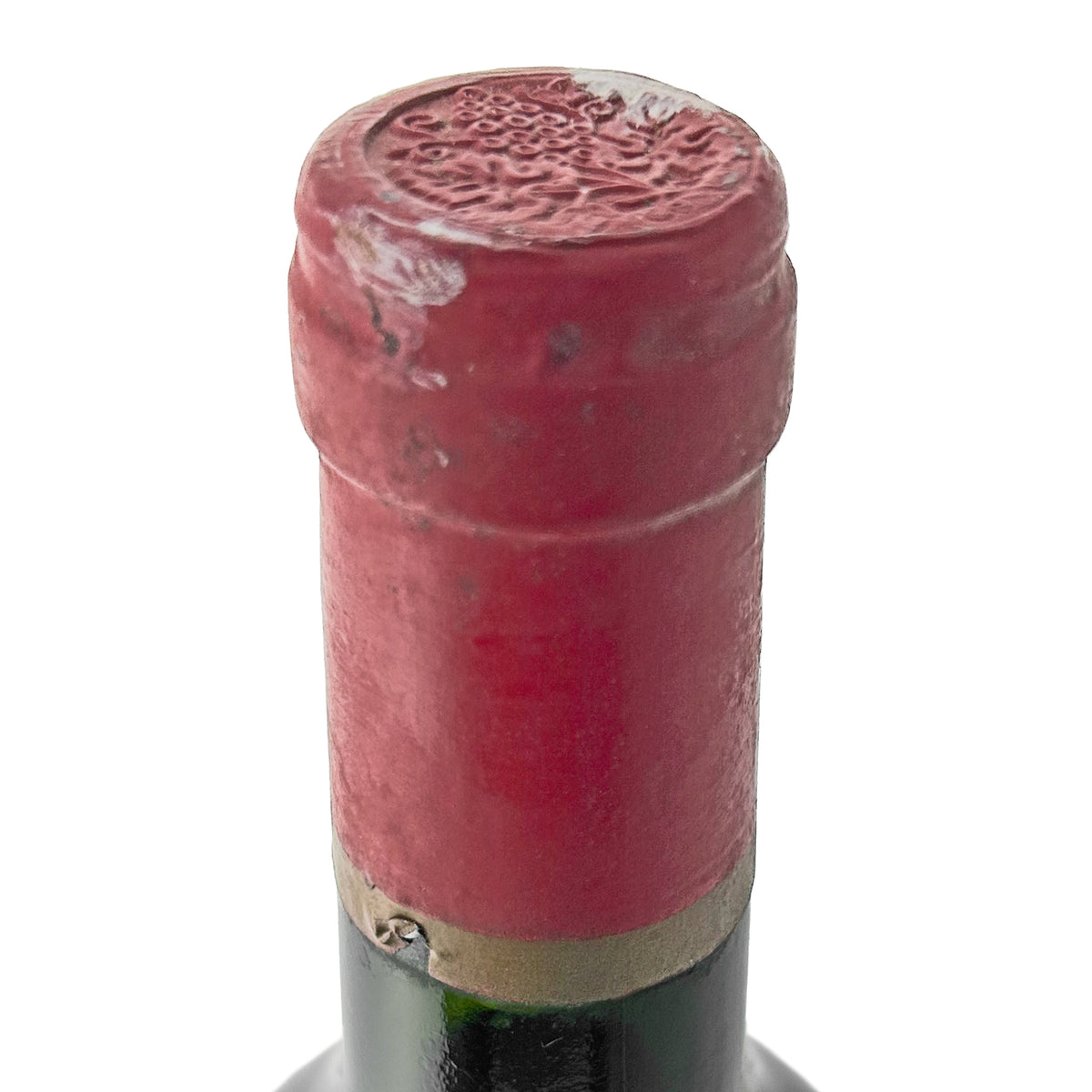
Capsule: minimally damaged, soiled
Cork: intact and in target position
About Château Lagrange 1980
Château Lagrange 1980 is a Troisième Grand Cru Classé from the Saint-Julien appellation in the Médoc, ranked in the famous 1855 classification. The estate is situated in the western part of the appellation on two gravel hilltops rising up to 24 meters above sea level – a remarkable elevation for the flat Médoc. The 1980 vintage was produced during the time of the Cendoya family, three years before the Japanese group Suntory acquired the Château and completely renovated it. At over 45 years old, this bottle is therefore a historical document from the era before the great renovation and a Bordeaux collector's wine for those who collect Saint-Julien in all its historical breadth.
Origin and History of the Estate
The roots of Château Lagrange date back to the Middle Ages; the name is derived from the French "grange," the term for an agricultural farmstead. In the 18th century, the Bordeaux-based Brane family expanded the vineyard. In 1787, Thomas Jefferson, while serving as the American minister to France, visited the estate and ranked it as a third growth in his personal Médoc classification. A few years later, Jean-Valère Cabarrus took over the property and had the neoclassical manor house built.
The defining figure of the 19th century was Count Tanneguy Duchâtel, Minister of the Interior under King Louis-Philippe, who acquired Lagrange in 1842 and subsequently dedicated himself entirely to viticulture. He had clay pipes installed for vineyard drainage, which was considered a pioneering achievement at the time. In 1845, the Tuscan-style tower was built according to the plans of architect Louis Visconti and remains the estate's landmark to this day. Under Duchâtel, the estate grew to about 280 hectares, with approximately 120 hectares under vine. In the 1855 classification, Lagrange received the rank of Troisième Grand Cru Classé, which it holds to this day.
In 1925, the Cendoya family bought the Château. In the following decades, parcels were sold off to neighboring estates, including land to Château Ducru-Beaucaillou in 1970, and the vineyard shrank to about 50 hectares. When Suntory took over the estate in 1983, the buildings and vineyards were in poor condition. Under the leadership of Marcel Ducasse, extensive replanting and the modernization of the vineyards and cellar followed. Château Lagrange 1980 is thus one of the last vintages produced entirely under the Cendoya family – an insightful counterpart for collectors building a Lagrange vertical to the vintages of the Suntory era.
Terroir, Grape Varieties and Label
The vines grow on two north and south-facing gravel hilltops with soils of gravel, sand, and iron-rich clay over a clay-limestone subsoil. Cabernet Sauvignon is the primary grape variety, supplemented by Merlot, creating a classic Cabernet-based Saint-Julien red wine; Petit Verdot was not added until the end of the 1980s. The label of the 1980 Château Lagrange shows the manor house with its Tuscan tower between two halberdiers in Renaissance costume, with the note "Grand Cru Classé en 1855" above. The owner is listed as "Sté Civile du Château Lagrange, Propriétaire à St-Julien-Beychevelle," and the imprint "Mis en bouteilles au château" designates the wine as a château bottling.
The 1980 Vintage
The 1980 vintage is considered one of the difficult years in Bordeaux. A cool spring was followed by a rainy flowering in June, the summer remained cool and damp, and the ripening of the grapes was significantly delayed. It only became warmer in August, and a mild September saved part of the harvest. The harvest officially began on October 10th, making it one of the latest in Bordeaux history. Well-drained gravel soils, such as those that characterize the Médoc, were clearly at an advantage that year. The red wines were generally light and accessible early on. Because many bottles were drunk in the 1980s, one rarely encounters a Saint-Julien red wine of this vintage on the market today – this also makes the Château Lagrange 1980 interesting for collectors.
For Collectors and as a Gift
As a 1980 vintage wine, this bottle is a gift with a personal connection for anyone born or married in 1980 – and a special present for a 50th birthday in 2030. Collectors value the 1980 Château Lagrange as a third growth with a storied history, as a rare representative of a less-traded vintage, and as a Bordeaux collector's wine from an era that no longer exists. Anyone looking for a historical Saint-Julien can buy Château Lagrange here and receive a château-bottled wine with its original label and capsule.
FAQ
Is the Château Lagrange 1980 still drinkable? The red wines of the 1980 vintage were light and accessible early on; after more than 45 years, they are fully mature. Whether this bottle is still enjoyable depends primarily on the cork and storage. The excellent fill level is a positive sign, but we cannot guarantee the condition of the wine inside at this age.
What does the fill level "Base Neck" mean for the Château Lagrange 1980? "Base Neck" means the wine reaches the bottom of the bottle neck. For a Bordeaux over 45 years old, this is a very good level, as part of the wine usually evaporates through the cork over the decades. The fill level is clearly visible in the photos.
What does "Troisième Grand Cru Classé" mean? The term refers to a Third Growth in the 1855 classification, which ranks the red wines of the Médoc in five levels. Château Lagrange belongs to the third level; the label reads "Grand Cru Classé en 1855."
Is this the same wine as Château Lagrange from Pomerol? No. Château Lagrange 1980 is a Saint-Julien red wine from the Médoc, produced by a winery classified in 1855. There is an unrelated winery of the same name in Pomerol. The label of this bottle clearly states "Saint-Julien" and "Appellation Saint-Julien Contrôlée."
Why does the label say "St-Julien-Beychevelle"? Saint-Julien-Beychevelle is the official name of the commune in which the estate is located. The appellation, however, is simply called Saint-Julien. Both references on the label are therefore correct.
Does the Château Lagrange 1980 come from the Suntory era? No. Suntory did not take over the estate until 1983. The 1980 vintage was produced under the Cendoya family, who had owned Château Lagrange since 1925, and is thus one of the last vintages before the extensive renovation.
Is the 1980 vintage wine suitable as a gift? Yes. Anyone who was born or married in 1980 receives a piece of their own history with this 1980 vintage wine, for a birthday or anniversary, for example. Please note the information on drinkability above.
Is the Château Lagrange 1980 suitable as an investment? We do not provide investment advice or yield projections. 1980 is not among the highly sought-after Bordeaux vintages. As a Bordeaux collector's wine, the appeal of this bottle lies in its classification, age, rarity, and its place in the history of the estate.


1980 Château Lagrange
-
Feature
Classification: Third Growth (Médoc)
Filling quantity: 750 ml - Bottle
Alcohol content: 13% Vol.
Allergens: contains sulfites
-
Origin
Wine type: Red wine
Country of origin: France
Growing region: Bordeaux
Appellation: Saint-Julien
Responsibility
Manufacturer/bottler and responsible food business operator at the same time:
Château Lagrange, 33250 Saint-Julien-Beychevelle, France
Description of Château Lagrange 1980
This Red wine from Château Lagrange comes from the appellation Saint-Julien , a growing region in Bordeaux . It is known that there is a classification system for wineries or wines in France You can complete your collection with this wine 1980 Château Lagrange because it belongs to the classification Third Growth Classified (Médoc) . The 750 ml - Bottle has an alcohol content of 13% Vol. .

1980 Château Lagrange
Condition
The photos on this page and the description below will give you more information about the condition of this bottle of Red wine from Château Lagrange 1980
Fill Level: Base Neck
Label: soiled, minimally yellowed
Capsule: minimally damaged, soiled
Cork: intact and in target position
If multiple wine bottles are available, the condition of the wine bottle is similar to all bottles available on this product page.
Explanation of the condition
Using a snapshot from we have recorded the condition of this wine bottle 1980 Château Lagrange for you.
We would like to point out that despite correct, constant and protected storage, the condition of the wine bottle can change over time. As with humans, the aging process can never be completely stopped. If your bottle Red wine Château Lagrange 1980 is on its way to you, shocks or weather conditions can affect its condition. But don't worry, we will pack your wine order carefully and safely.
What you should consider when delivering wine
-
Consider where to leave it
The plan is for you to receive your bottle of wine - Château Lagrange 1980 - in person. This ensures that the Red wine is not unnecessarily exposed to the weather. If you have wine delivered to a parcel station, pay attention to cold or hot day and night temperatures. This is because a parcel station is usually not air-conditioned. Spending too long in such a parcel compartment can affect the wine bottle. If the wine delivery was left on your doorstep, a longer stay in hot, cold or wet conditions can also disadvantage the wine bottle.
-
Avoid condensation
Especially in the winter months (below 10 ° Celsius), your wine delivery is exposed to cold temperatures during transport. We therefore recommend that you place your package unopened in a room with a room temperature of approx. 15 - 18 ° Celsius for approx. 24 hours after delivery. This way, the wine bottle acclimatizes gently. If you were to place the cold wine bottle in a warm room, condensation would occur on the glass body. This happens because the warm, humid room temperature hits the cold surface of your new Red wine bottle. The result would be that water droplets and moisture would affect the wine label. A wavy, partially slightly detached label could occur.