
Old Bordeaux Vintages: Why the 1990s and 2000s Are Back in Demand
Old Bordeaux vintages are meeting far stronger demand in 2026 than young ones. That is what data from the Liv-ex trading platform shows. For first growths from the 2000 to 2005 vintages, buying interest in summer 2026 was more than twice the supply on offer. Yet prices are barely moving. Lafite, Latour, Haut-Brion and Margaux 2000 sit close to multi-year lows.
The merchant Bordeaux Index sees consumption as the main reason: stocks of old Bordeaux vintages are being drunk. No new bottles from the 1990s and 2000s will ever be made. We explain what the figures say and which old Bordeaux vintages are affected. And what to look for when you buy aged Bordeaux.
Key takeaways
- Demand: For first growths from the 2000 to 2005 vintages, the bid:offer ratio on Liv-ex was above 2 in summer 2026. For vintages after 2020, the source gives 0.7.
- Prices: According to Liv-ex, Lafite 2000 is at its cheapest in 18 years. Latour, Haut-Brion and Margaux 2000 are at or around their 2015 lows.
- Trading: According to Liv-ex data, the trade value of pre-2011 Bordeaux rose by around 50% in Q3 2026 on the previous quarter. That is turnover, not a price rise.
- Supply: According to the merchant Bordeaux Index, first growths from 1982 and 1986 now surface only sporadically. The same is emerging for 1996, 1999, 2000 and 2001.
- Context: According to Decanter, no sharp price rise is expected in the near term. The Liv-ex Bordeaux 500 was slightly down for the year to the end of September 2026.
- 1. Old Bordeaux vintages in 2026: the key figures
- 2. Price, bid:offer, trade value – what the figures really say
- 3. Why old Bordeaux vintages are becoming scarcer
- 4. Who is buying mature Bordeaux now
- 5. Which vintages are in focus
- 6. Beyond the first growths: what it means for classified growths
- 7. What speaks against a quick price rise
- 8. Buying old Bordeaux vintages: what collectors should look for
- 9. Conclusion
- 10. FAQ – reife Bordeaux-Jahrgänge
- 11. Sources
Old Bordeaux vintages in 2026: the key figures
The fine wine market in 2026 is still under pressure. According to Liv-ex's September report, fine wine prices are at a ten-year low in real terms, that is, adjusted for inflation. That is exactly why mature Bordeaux vintages stand out when they are entering their drinking window or are already in it. Liv-ex explicitly calls them a potential opportunity in its September report.
We did not have access to the original Liv-ex reports. We therefore cite the figures via Decanter, the market report of the merchant Vinum Fine Wines, WineNews and Vinetur.
| Metric | Value | Period | What it measures |
| Bid:offer ratio, first growths, 2000–2005 vintages | above 2 | Summer 2026 | Demand |
| Bid:offer ratio, vintages after 2020 (segment not specified in the source) | 0.7 | Summer 2026 | Demand |
| Château Lafite Rothschild 2000 | below 2008 levels, cheapest in 18 years | September 2026 report | Price |
| Latour, Haut-Brion and Margaux 2000 | at or around their 2015 lows | September 2026 report | Price |
| Trade value, pre-2011 Bordeaux | around +50% on the previous quarter, around +36% year on year | Q3 2026 | Turnover |
| Trade value, Bordeaux 2011 and younger | slightly down year on year | Q3 2026 | Turnover |
| Liv-ex Fine Wine 100 | +1.1% | September 2026 | Price (index) |
| Liv-ex Bordeaux 500 | −0.2% year to date; +0.4% over 12 months | January to September 2026; October 2025 to September 2026 | Price (index) |
Sources: Liv-ex data as reported by Decanter (23 October 2026), Vinum Fine Wines (16 October 2026), WineNews (6 October 2026) and Vinetur (7 October 2026). Vinum is a wine merchant.
The table shows a striking pattern. Demand and trading are picking up for old Bordeaux vintages. The prices of the 2000 first growths, by contrast, are close to multi-year lows. Which Bordeaux wines have nevertheless gained value in 2026 according to Liv-ex is covered in our article on the Bordeaux winners of 2026.
Price, bid:offer, trade value – what the figures really say
In market coverage of mature Bordeaux vintages, three metrics are easily confused. Yet they measure different things. Keeping them apart gives a clearer reading of the market.
Three metrics, three messages
- Price: what a bottle or case currently costs. It shows where the market stands. It does not show how many buyers there are.
- Bid:offer ratio: bids in relation to offers. It shows whether demand exceeds supply. It does not show whether prices are already rising.
- Trade value: the sum of all turnover in a period. It shows how much money flows into a segment. It does not show whether individual wines are becoming more expensive.

What the bid:offer ratio measures
Liv-ex is a trading platform on which mainly wine merchants buy and sell. Bids and offers sit side by side there. The bid:offer ratio puts the two in relation. A value of 1 stands for balance. Above 1, demand outweighs supply; below 1, supply outweighs demand.
For first growths from the 2000 to 2005 vintages, the ratio was above 2 in summer 2026. For vintages after 2020, it was 0.7. The contrast is clear. For these mature first growths, buyers are looking for the bottles, not the other way round. For the young vintages, supply outweighs demand.
The scope of the figure matters. It applies to the five Premiers Grands Crus Classés: Lafite Rothschild, Latour, Margaux, Haut-Brion and Mouton Rothschild. It says nothing about Bordeaux as a whole. The source gives no exact value, only "above 2". Whether the comparison figure of 0.7 also refers only to first growths is not clear from the source.

Why trade value is not price
Trade value is the sum of turnover. It rises when more bottles change hands, or more expensive ones. According to Liv-ex data cited by Vinum, the trade value of pre-2011 Bordeaux rose by around 50% in Q3 2026 on the previous quarter. Year on year, the increase was around 36%. Bordeaux from the 2011 vintage onwards was slightly down year on year.
In other words: far more old Bordeaux vintages are being traded. It does not mean that mature Bordeaux vintages have become 50% more expensive. For Lafite, Latour, Haut-Brion and Margaux 2000, Liv-ex reports prices close to multi-year lows in the same period.
Why old Bordeaux vintages are becoming scarcer
Old Bordeaux vintages cannot be reproduced. Every bottle that is drunk leaves the market for good. That is precisely the effect described by the international merchant Bordeaux Index.
According to Geraint Carter of Bordeaux Index, prices fell by 20% or more in the recent downturn. At the same time, the wines are being drunk. Carter sees first signs that the available quantity is becoming tight.
In its market column in Decanter, Bordeaux Index goes into more detail. Availability of mature Bordeaux vintages has tightened markedly over the past six to twelve months, it says. There is no single trigger. Rather, decades of dinners and sales have steadily used up a limited stock. The examples:
- 1982 and 1986: first growths from these vintages were plentiful ten years ago. Today they surface only sporadically, and rarely more than one or two cases at a time.
- 1996 and 2000: the same development is emerging here.
- 1999 and 2001: these less highly rated vintages are also becoming scarcer. They were once exported to Asia in large quantities.
How rare some vintages have already become is shown in our article on the rarest Bordeaux vintages of the 20th century.
Some context is needed here. Bordeaux Index sells wine and sponsors the market section in Decanter. Its observation is plausible, but it is not neutral statistics. We are not aware of any public stock figures for mature vintages.
Late releases by the châteaux
Some châteaux hold back stock themselves. According to Decanter, Château Latour released its 2016 vintage for the first time only in 2025. Château Palmer re-released its 2016 in September 2026, ten years after the harvest. Liv-ex quoted a UK offer price of £3,168 per case of twelve bottles "in bond", i.e. before duty and taxes. Both examples concern the 2016 vintage. They bring no fresh supply for the 1990s and 2000s. Sales straight from château cellars are a different matter: the Haut-Brion auction in October 2026 also brought many pre-2000 vintages to market. These are one-off events, not a steady source of supply.
Who is buying mature Bordeaux now

Three groups of buyers looking for old Bordeaux vintages can be derived from the sources. Their motives differ.
Drinkers looking for Bordeaux that is ready to drink
Tim Triptree MW is international director of wines and spirits at Christie's. He has seen continued strong interest in mature Bordeaux vintages in 2026. After the pandemic, prices softened, mainly for younger Bordeaux vintages, he says. Mature back vintages, by contrast, have "proved to be remarkably resilient". He also notes a growing group of younger wine drinkers at auction who are particularly interested in mature Bordeaux that is ready to drink.
The thinking behind this is simple. Many Bordeaux from the 1990s and early 2000s are now ready to drink or approaching their peak. Young vintages often need many more years. Anyone who mainly wants to drink their wine would rather buy it ready.
US buyers
According to the October report of Vinum Fine Wines, US buyers are restocking their cellars. They are said to be less price-sensitive than British buyers. And quicker than most to recognise the value of old Bordeaux vintages. That is a merchant's assessment, not a statistic.
Younger auction buyers
In October 2026, Christie's in Hong Kong auctioned wines from the collection of Henry Tang; the sale had been announced for 10 October. According to Vinum, it raised around £4.8m; according to Forbes Argentina, US$6.4m. All 860 lots found a buyer. Almost half of the buyers were Millennials or Gen Z. According to Forbes Argentina, around 70% of them were new clients; according to Vinum, they were buying at auction for the first time.
For old Bordeaux vintages, this is only an indirect signal. The top results came from Burgundy, above all Domaine de la Romanée-Conti, Henri Jayer and Leroy. According to Forbes Argentina, the most expensive lot was a magnum of Romanée-Conti 1971 at US$111,500. The sale shows that younger buyers are active in the top segment of the auction market. It does not prove any particular demand for Bordeaux.
Our analysis of the Haut-Brion auction at Sotheby's provides an example for mature Bordeaux vintages. There, every lot of the red grand vin from vintages before 2000 found a buyer.
Which vintages are in focus
The sources do not give a ranking. But they keep mentioning the same old Bordeaux vintages. The table summarises what is reported for which vintage.
| Vintage | What market sources reported in 2026 | Source |
| 1982 and 1986 | First growths plentiful ten years ago, now only sporadic and rarely more than one or two cases | Bordeaux Index (merchant), via Decanter |
| 1996 | Availability falling, as for 1982/1986; according to Decanter, firmer prices in 2026 | Bordeaux Index; Decanter |
| 1999 and 2001 | Once heavily exported to Asia, now also scarcer | Bordeaux Index (merchant), via Decanter |
| Bordeaux 2000 | Lafite below 2008 levels, cheapest in 18 years; Latour, Haut-Brion and Margaux at or around their 2015 lows; availability falling; according to Decanter, firmer prices in 2026 | Liv-ex and Bordeaux Index, via Decanter |
| 2000 to 2005 (first growths) | Bid:offer ratio above 2 in summer 2026 | Liv-ex, via Decanter |
| All vintages before 2011 | Trade value in Q3 2026 around +50% on the previous quarter | Liv-ex, via Vinum |
| 2017, 2019, 2021, 2022 | Buyers in no hurry, even for well-rated 2019s and 2022s | Bordeaux Index (merchant), via Decanter |
As of October 2026. Prices vary widely by château. We therefore do not give blanket prices per vintage.
Among old Bordeaux vintages, Bordeaux 2000 has the most data points. It shows the paradox of the market: the price level is low, yet according to Decanter prices looked firmer in 2026. What sets the individual vintages apart in terms of quality is covered in our overview of the best Bordeaux vintages.
You will find aged Bordeaux from these two decades in our shop under Bordeaux from the 1990s and Bordeaux from the 2000s.
Beyond the first growths: what it means for classified growths
The most concrete price and demand data on old Bordeaux vintages relate to the five first growths. For classified growths from the second to the fifth tier, the sources we reviewed contain no comparable bid:offer figure. What follows is therefore our assessment, not a documented market observation.
Some points suggest that the pattern partly carries over to the old Bordeaux vintages of the classified growths:
- According to the Liv-ex data, the rise in trade value applies to pre-2011 Bordeaux as a whole, not just the first growths.
- The mechanism is the same. Mature second or third growths are being drunk too, and there is no new supply.
- Classified growths cost a fraction of the first growths. For buyers mainly looking for Bordeaux that is ready to drink, they are an obvious choice.
Other points speak against it. Many classified growths are traded less often. There are fewer price points and fewer buyers looking for one specific vintage. Scarcity there does not automatically lead to higher prices.
What speaks against a quick price rise
The signals for old Bordeaux vintages are positive. Still, there is no reason for euphoria. Four points act as a brake:
- The broader Bordeaux market is weak. In the fine wine market of 2026, the Liv-ex Bordeaux 500 was down 0.2% for the year to the end of September. According to Vinetur, it was the only major Liv-ex index in negative territory. Champagne 50 (+4.1%) and Italy 100 (+3.5%) led the way.
- No price jump expected. According to Decanter, no sharp price rise is expected in the near term. Geraint Carter of Bordeaux Index does say that mature Bordeaux looks like one of the safest parts of the market. But he adds a caveat: only if you buy at the right price.
- The sources have interests. Bordeaux Index and Vinum sell wine. We only know the Liv-ex figures from secondary reports, not from the original reports.
- It is a snapshot. The bid:offer figures date from summer 2026, the trade values from a single quarter. Whether this becomes a lasting trend for old Bordeaux vintages will only become clear over several quarters.
Young vintages remain the counterpoint to old Bordeaux vintages. A look at the 2026 en primeur campaign shows where they stand. If you also see mature Bordeaux as an investment, you will find the basics of wine as an investment in a separate article.
Buying old Bordeaux vintages: what collectors should look for

With old Bordeaux vintages, the vintage is not all that counts. The condition of every single bottle counts too. Five points help with the choice.
- Provenance. Where does the bottle come from, and how was it stored? Purchase receipts, storage records and original wooden cases support the value. Our guide to properly storing wine bottles explains why storage matters so much.
- Fill level. Some ullage is normal in old bottles. An unusually low fill level, however, can point to problems with the cork or storage. Our page on the fill level of a Bordeaux bottle shows how to assess it.
- Cork, capsule and label. Traces of seepage are a warning sign. A damaged capsule or a badly damaged label mainly reduces the resale value.
- Drinking window. Liv-ex highlights mature Bordeaux vintages that are entering their drinking window or are already in it. But that does not apply across the board to every wine of a vintage. Château, vintage and storage determine when a wine is at its peak.
- Total cost. UK market prices are usually quoted "in bond", i.e. before duty and taxes. At auction, the buyer's premium is added to the hammer price. So always compare final prices.
Do you own older bottles yourself and wonder what they are worth? Our guide explains what an old wine is really worth.
Conclusion
Old Bordeaux vintages are back in demand in 2026. Liv-ex data shows more bids than offers for first growths from the 2000 to 2005 vintages and far more trading in pre-2011 Bordeaux. Merchants also report shrinking stocks. Prices barely reflect this: Lafite, Latour, Haut-Brion and Margaux 2000 are close to multi-year lows. Whether prices will follow remains open.
For collectors and drinkers, this means: aged Bordeaux is available and ready to drink, but according to merchants in dwindling quantities. If you buy old Bordeaux vintages, look at provenance, condition and drinking window. A quick rise in value should not be the reason to buy.
These aged Bordeaux from our range fit the topic:
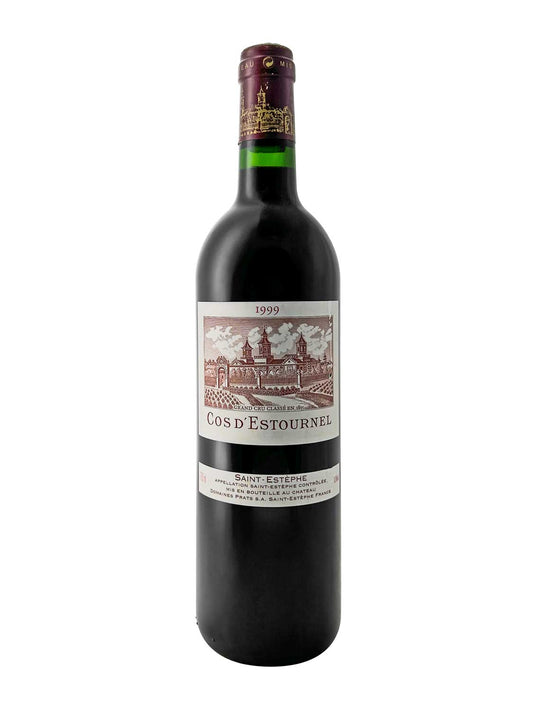
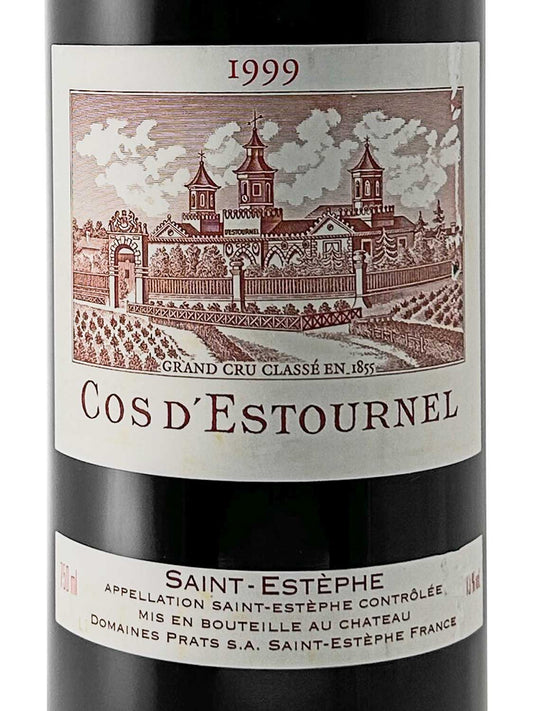
- Château Cos d'Estournel 1999 – Saint-Estèphe, second growth (Deuxième Grand Cru Classé)
- Château Pichon Baron 1998 – Pauillac, second growth (Deuxième Grand Cru Classé)
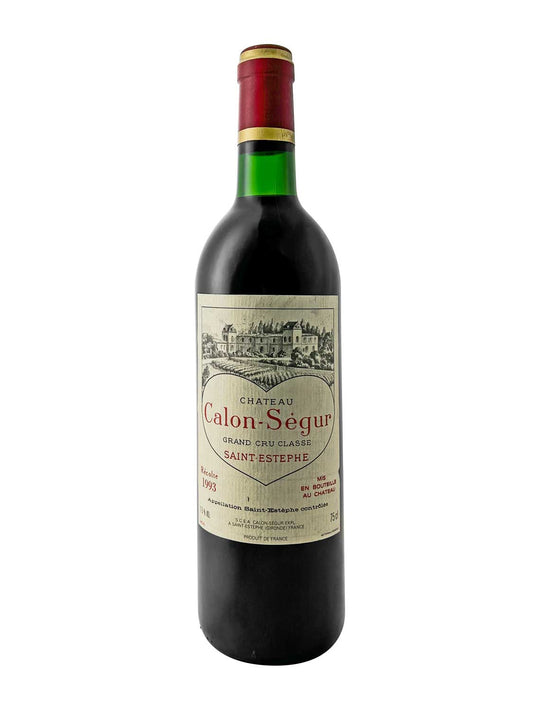
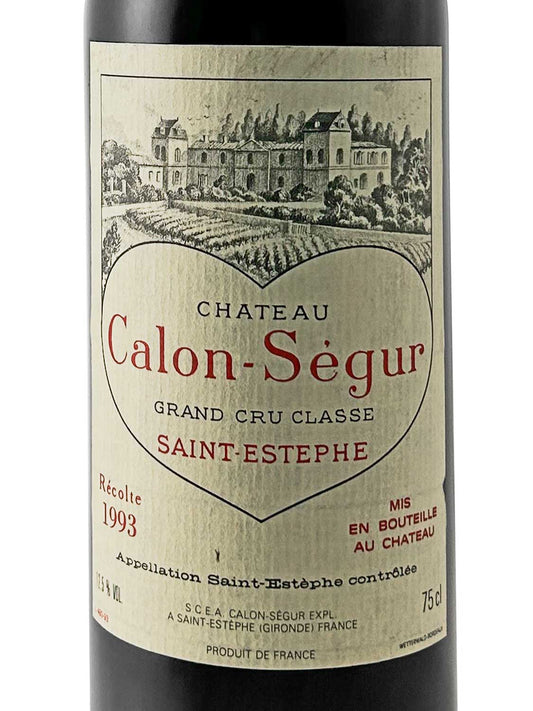
- Château Calon-Ségur 2005 – Saint-Estèphe, third growth (Troisième Grand Cru Classé)
- Château Léoville Las Cases 2008 – Saint-Julien, second growth (Deuxième Grand Cru Classé)
What counts as an old Bordeaux vintage?
There is no fixed definition. In the current market data, Liv-ex distinguishes between pre-2011 Bordeaux and Bordeaux from 2011 onwards. For drinking, maturity matters more than age: a wine is mature once it has reached its drinking window. For great Bordeaux from strong vintages, that often takes many years. The old Bordeaux vintages currently in focus are mainly those of the 1990s and 2000s.
Why are old Bordeaux vintages in demand in 2026?
According to Liv-ex, demand for first growths from the 2000 to 2005 vintages clearly exceeded supply in summer 2026. The merchant Bordeaux Index reports shrinking stocks because the wines are being drunk. According to Christie's, younger auction buyers are also particularly interested in Bordeaux that is ready to drink. For young vintages, by contrast, buyers in the fine wine market of 2026 are in no hurry, according to Bordeaux Index.
What does a bid:offer ratio above 2 mean?
On the Liv-ex trading platform, buying interest in these wines was more than twice the supply on offer. A value above 1 indicates excess demand. For first growths from the 2000 to 2005 vintages, the ratio was above 2 in summer 2026; for vintages after 2020 it was 0.7.
Are prices for old Bordeaux vintages rising now?
Hardly, so far. According to Liv-ex, Lafite 2000 is at its cheapest in 18 years. Latour, Haut-Brion and Margaux 2000 are close to their 2015 lows. According to Decanter, no sharp price rise is expected in the near term. A reliable forecast is not possible.
Which vintages of the 1990s and 2000s are in focus?
Among old Bordeaux vintages, the merchant Bordeaux Index names above all 1996, 1999, 2000 and 2001 as becoming scarcer. Liv-ex data highlights the first growths from the 2000 to 2005 vintages. Bordeaux 2000 has the most market data. From the 1980s, according to Bordeaux Index, the first growths of 1982 and 1986 have become particularly scarce.
What should I look for when buying an aged Bordeaux?
Provenance, fill level, the condition of cork, capsule and label, and the drinking window. Also compare final prices including taxes, shipping and, where applicable, the buyer's premium.
Sources
- Wine investment: A rising market for mature Bordeaux – Decanter, Chris Mercer (23 October 2026)
- Fine Wine Market Report October 2026 – Vinum Fine Wines, Miles Davis (16 October 2026)
- WineNews (English edition): report on the Liv-ex indices, January to September 2026 (6 October 2026)
- Italienische Weine verzeichnen bis September die stärksten Zuwächse am Sammlermarkt – Vinetur (7 October 2026, in German)
- Pagaron más de US$ 100.000 por un vino en una subasta: quiénes son los nuevos compradores y qué buscan – Forbes Argentina, Pancho Barreiro (14 October 2026, in Spanish)
- Christie's to auction the cellar of the Hon. Henry Tang – Decanter, sponsored content created with Christie's (2 October 2026)
About this article: wein-sammeln.de editorial team. Market data as of 3 November 2026. The Liv-ex figures come from the secondary reports listed above, not from the original Liv-ex reports. Merchant sources are identified as such in the text.
Note: This article is for information only and is not investment advice; past market data is no guide to future prices. The images are AI-generated illustrations.